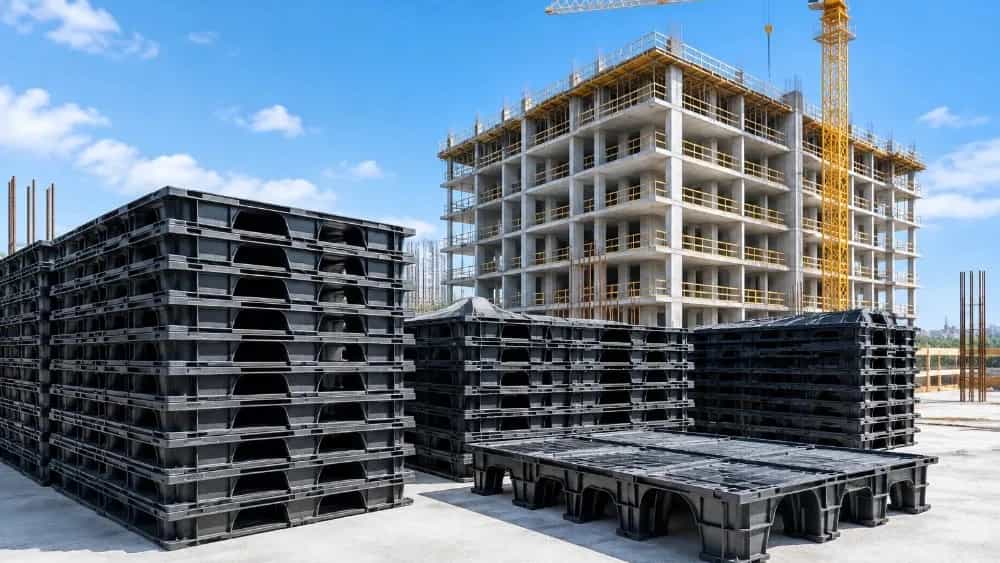
In the construction industry, managing costs and increasing productivity are among the most important priorities of contractors, builders, and mass builders. The increase in the volume of projects, the need to control execution time, manpower management and reduce wastage of materials has made the selection of appropriate equipment and implementation methods more important. In the meantime, Lightform's economic efficiency for contractors and mass builders has become one of the significant topics in the investigation of new roof implementation methods.
Lightform as a reusable form in some roof implementation systems, can be an alternative to commonly used blocks in suitable implementation conditions. The main difference of this system is the possibility of collecting the mold after concreting and reusing it; A feature that in many and planned projects can affect the cost of providing materials, the amount of waste and resource management.
For contractors who work continuously in construction projects, a short-term look at the cost of equipment procurement is not enough. The economic decision should be made based on the total cost of implementation, reusability, maintenance conditions and productivity during the life of the product.
In this direction, choosing the right supplier is also very important. Heidari plastic mould, focusing on introducing and providing solutions related to plastic moulds, can be one of the options considered by builders and project managers to know the products and choose a molding system that suits the implementation needs.
What is Lightform and what is its application in the construction industry?
Light form is a type of non-permanent form that is used in specific roof implementation systems to create the required space between structural components. After passing the necessary steps in the execution process, these templates are removed from their place and if they are healthy and comply with the manufacturer's requirements, it is possible to use them again.
In the common methods of roof implementation, some filler materials remain in the structure after concreting and must be prepared again for each stage of implementation. In contrast, the Lightform system relies on the use of a collapsible template. This difference is the main basis for examining the economic efficiency of Lightform for contractors and mass producers.
Of course, the use of this system depends on the type of roof, structural plans, executive details and technical criteria of the project. Therefore, before choosing light form, it should be ensured that it is compatible with the design of the structure and the implementation method approved by the accounting engineer and the technical factors of the project.
From a management point of view, Lightform is not only an executive tool; Rather, it can be a part of the workshop's asset management program. When the molds are properly collected, checked and prepared for the next run after each step, it is possible to use the equipment more effectively and reduce the need to repurchase consumables.
How is Lightform economical for contractors and mass builders?
Economic analysis of any building system should go beyond the initial cost of equipment procurement. In large projects, incidental and recurring costs contribute significantly to the final cost of implementation. For this reason, the economic efficiency of Lightform for contractors and mass builders should be evaluated by considering several main factors.
Reducing the need for frequent purchases of consumables
One of the most important economic benefits of reusable molds is the reduction of dependence on the resupply of materials that are used in conventional methods.
In projects that have several stages of roof implementation, repeated purchases of filler materials can create recurring costs. Using Lightform makes it possible for healthy forms to be used for the next steps after being compiled.
In this way, part of the cost of providing the equipment is transformed from a recurring expenditure to an investment in a reusable tool. Of course, the amount of savings depends on the number of times of actual use, the quality of the template, how to maintain it, and the conditions of the project.
Better management of operational costs
The cost of the roof is not limited to the materials used. Manpower, transportation, workshop preparation, equipment collection and waste management also affect the final cost.
The economical use of Lightform for contractors and mass builders becomes more apparent when the process of using templates is done with careful planning. Determining the place of storage, scheduling the collection and transfer of templates, and coordination between executive groups can prevent the waste of resources.
On the other hand, improper maintenance or unprincipled implementation may cause damage to the molds and increase repair or replacement costs. Therefore, the economic advantage of this system depends on choosing the right product and its correct management in the workshop.
Reduction of construction waste
Waste production is one of the challenges of construction project management. Damaged consumables, scraps and unusable materials can increase the cost of waste collection and disposal.
Using reusable molds, if implemented correctly, can reduce the amount of consumables and the amount of waste. In addition to better management of resources, this issue also helps to make the workshop environment more orderly.
For contractors and mass builders managing multiple projects simultaneously, reducing waste and making better use of equipment can be part of a cost control program.
The role of template reuse in increasing investment returns
One of the most important criteria for evaluating construction equipment is the number of times they are usefully used. A template that is only used for one execution stage has different economic conditions with a template that can be used in several stages.
In examining the economic efficiency of Lightform for contractors and mass builders, the cost of preparing a set of templates should be compared with the number of times of its healthy and effective use. The greater the possibility of re-use, the lower the share of the initial cost per time of use; Of course, this is achieved when the templates remain technically sound and can be used in future projects.
To achieve this goal, it is necessary to check the templates after each step of execution. Proper cleaning, preventing impact, proper storage and following the manufacturer's instructions are measures that can increase the useful life of the equipment.
Contractors who manage equipment turnover on a regular basis are better able to assess workshop inventory capacity and plan for the next stages of implementation. This issue becomes especially important in mass construction projects where the repetition of executive operations is more.
The effect of Lightform on the execution speed and time management of the project
Project execution time is one of the influencing factors on construction overhead costs. Prolonging the executive operation can increase the costs of workshop management, coordination of forces and use of equipment.
In systems where templates can be collected and reused, proper planning for template circulation can help streamline operations. When the equipment needed for each stage is ready on time, the possibility of interruption caused by the resupply of some materials is reduced.
However, increased execution speed does not happen automatically in all projects. The level of productivity depends on the method of installation and assembly, training of manpower, roof design, workshop conditions, and coordination between executive groups.
To better exploit the benefits of Lightform, the contractor must specify the execution method and the steps of the forms circulation before starting the work. Coordination between the formwork, reinforcement and concreting team also plays an important role in preventing unnecessary stops.
As a result, the economic benefit of Lightform for contractors and mass builders is not only related to reducing the cost of materials; Better time management and effective use of human resources are also important in its evaluation.
Economical comparison of light form with common methods of roof implementation
To choose a suitable implementation system, it is necessary to check the characteristics of different methods according to the actual conditions of the project. In the method of using consumable filler materials, a part of the material supply cost is repeated at each stage. In the Lightform system, templates can be used in several steps if reuse is possible.
This difference is significant, especially in projects with more similar roofs. However, it cannot be concluded that Lightform will be a more economical choice in all projects without examining the technical specifications and implementation conditions.
For a correct comparison, the cost of preparation and preparation of molds, transportation, manpower, maintenance, possibility of damage, number of times of use and collection conditions should be considered. Also, any change in the roof implementation method must be compatible with the structural plans and related technical standards.
In small projects, limited storage space or lack of reusability may affect the economic outcome. In large and multi-stage projects, the possibility of regular circulation of templates can create more advantages.
Therefore, fundamental decision-making is based on technical analysis and calculation of the total cost of each step, not solely on the promotional features of a product.
The importance of choosing the right template for mass production projects
Manufacturing requires careful planning, quality control and simultaneous management of resources. In such projects, choosing the right equipment can affect the execution process of different parts of the building.
The mold used should be checked in terms of dimensions, resistance, construction quality and compatibility with the project execution method. Also, the ability to move, collect and store it should be suitable for the conditions of the workshop.
In repetitive projects, the integration of equipment and coordination between execution stages is very important. Using appropriate templates can simplify equipment management; But achieving the desired result requires compliance with technical instructions and monitoring the performance of the executive group.
For contractors who intend to use the Lightform system in their project, it is necessary to check the quality of the product and receive technical information from the supplier. Knowing the limitations of applications, the correct method of use and maintenance conditions can prevent unforeseen costs.
Heydari plastic mold; An option to review formatting solutions
In choosing the equipment needed for construction projects, access to the right information about the product and knowing the implementation needs is very important. Contractors and mass builders should be able to check the technical specifications, type of application and conditions of use before choosing a template.
Heidari Plastic Mold is a name that you can consider for solutions related to plastic molds and equipment needed for construction projects. The conscious choice of the mold is possible when the product features match the technical requirements and actual conditions of the project.
To choose Lightform or other plastic molds, it is necessary to pay attention to the quality of raw materials, dimensional accuracy, strength, ease of movement, and the possibility of reuse. It should also be determined what kind of operating system the product is designed for and what limitations there are in its use.
Heidari plastic mold can be considered by manufacturers in the process of checking available options. It is recommended to carefully evaluate the technical specifications of the products and their compatibility with the implementation plans and project needs before making the final choice.
The purpose of a suitable choice is not only to provide equipment; Rather, it is to achieve a combination of executive quality, resource management and long-term cost control.
Important criteria for choosing Lightform with an economic approach
In order for the use of Lightform to become a logical and economic decision, it is better to consider a set of technical and executive criteria.
Build quality and mold durability
The quality of construction is one of the factors affecting the longevity of the equipment. The mold must be designed according to the intended application and have an acceptable performance under the conditions of use according to the manufacturer's instructions.
Inspection of raw materials, quality of connections, uniformity of dimensions and resistance to normal workshop conditions can be effective in choosing the right product.
Ease of transportation and maintenance
Equipment that is difficult to move and store may add more overhead to the project. For this reason, it is important to check the dimensions, weight, layout and maintenance requirements of the mold.
In workshops that have limited space, planning for storing and moving equipment should be done from the beginning.
Compatibility with the plans and roof implementation method
No template can be considered suitable for all projects without checking the structural conditions. The dimensions of the openings, the details of the beams, the requirements of concrete pouring and the method of the roof should be compatible with the selected system.
Any decision about replacing materials or changing the execution method must be done with the approval of the technical factors responsible for the project. Compliance with this principle, in addition to maintaining quality, prevents rework and costs caused by inappropriate selection.
Ability to manage and track equipment
In large projects, knowing the number of healthy molds, molds in need of repair, and ready-to-use equipment helps better resource management.
Recording the state of the equipment after each stage of execution, planning for their transfer and preventing the molds from being lost or damaged can increase the productivity of the collection.
How to evaluate the real cost of using Lightform?
Economic evaluation should be done based on the actual cost of each stage of implementation. For this, the contractor can record all the costs associated with the chosen system in a certain period and compare it with alternative methods.
In this review, the cost of mold preparation, transportation, manpower, maintenance, repairs and preparation for reuse should be considered. Also, the number of times the template is used effectively and the amount of damaged or unusable templates are important.
On the other hand, the costs that are reduced by using a collapsible format should also be considered; including the need to resupply some consumables and waste management related to them.
The important point is that the result of calculations depends on the conditions of each project. A system may have a favorable economic performance in a project with a large number of similar roofs, but in a small project with operational constraints, it may produce a different result.
For this reason, the economic analysis of light form for contractors and mass producers should be done based on the actual information of the workshop, the schedule and the technical specifications of the product.
The role of correct management in increasing Lightform productivity
Even high-quality equipment cannot provide maximum efficiency without proper management. To use Lightform effectively, installation, assembly, cleaning and maintenance instructions must be followed properly.
Manpower training, assigning responsibilities and planning to transfer templates from one part of the project to another are measures that can increase productivity.
It is also necessary to check the molds before reuse so that damaged or inappropriate equipment does not enter the next stage of execution. Compliance with this issue helps to maintain the quality of work and reduce the possibility of execution stops.
In mass production projects, regular equipment management can help create a more predictable process. The more accurate the executive planning, the more effective use of resources and better control of side costs will increase.
Lightform and responsible construction; Reducing waste of resources
Lightform can help to reduce the need for frequent preparation of consumable filling materials in case of correct use and the possibility of effective circulation of molds. This issue is important in terms of resource management; Because reducing the repeated consumption of materials can also make the process of supplying and maintaining materials more regular.
Of course, the assessment of environmental effects should be done by considering the useful life of the product, the method of production, transportation, maintenance and the possibility of its recycling. Therefore, the use of reusable formwork alone does not guarantee the reduction of all environmental impacts, but it can be part of a responsible resource management approach in construction.
summary
The economic cost of Lightform for contractors and mass builders depends on a set of technical, executive and management factors. The possibility of reusing the mold, reducing the need for frequent preparation of some consumables, better management of equipment and reducing part of the waste can be the most important advantages of this system in the right conditions.
However, achieving the desired economic result depends on the selection of the product compatible with the project, compliance with technical instructions, principled maintenance and detailed planning for the circulation of molds. For this reason, examining the finished cost during the life of the product will be a more appropriate measure than focusing only on the initial cost of the equipment.
For builders looking to improve their project execution process and use equipment more effectively, a Lightform review can be part of a cost management program. Comparing implementation methods, evaluating technical specifications and choosing the right supplier will make the decision-making process clearer.
Heidari plastic mold can also be considered by contractors and bulk manufacturers in the way of examining options related to plastic molds. By knowing the needs of the project, checking the features of the products and meeting the technical requirements, it is possible to choose a system suitable for the implementation conditions.
Finally, economic success in construction is not the result of a single decision; Rather, it is the result of coordination between proper design, equipment selection, manpower management and continuous cost control. Lightform becomes a valuable option when it is used within the framework of this approach and according to the actual requirements of the project.